f you have just bought a Tesla, BYD, or any other electric car, EV paint protection should be near the top of your to-do list. Strong EV paint protection matters more than most new owners realise, because the paint on modern electric vehicles is often thinner and softer than the paint on a traditional car.
1. Why EV Paint Protection Is Different
EV paint protection is its own conversation because electric cars are built differently. To save weight and meet strict emissions targets, most EV makers — Tesla, BYD, Polestar, MG and others — use thinner, water-based paint systems applied in fewer coats. The result looks fantastic on delivery day, but the factory paint underneath is more delicate than buyers expect.
There is also a visual catch. With no rumbling engine to distract the eye, every detail of an EV’s finish is on show, so each swirl mark, water spot, and stone chip stands out more than it would on a combustion car. That combination — softer paint plus a more revealing finish — is exactly why EV paint protection has become such a hot topic in Canberra.
EVs are everywhere now
The ACT has one of the highest rates of EV uptake in the country, and with research suggesting electric cars could make up the majority of new sales within a decade, more Canberra drivers than ever are asking how to keep that fresh finish looking new.
2. The Soft-Paint Problem: Why EVs Chip and Swirl
The core issue is thickness. Many EVs carry only around 3–4 mils of paint where traditional cars might have 5–8, which leaves far less material to absorb day-to-day wear. That thin factory paint is why owners report chips and swirl marks appearing surprisingly early, and why EV paint protection is worth planning before problems start.
Canberra’s environment makes it worse. Brutal summer UV bakes the paint, frosty winters and grit add abrasion, and roadworks and gravel throw up debris. Add an automatic brush car wash or two and that soft paint quickly picks up haze and fine scratches. Here are the threats your EV’s paint faces every week:
- UV oxidation from intense Canberra sun, which dulls and fades unprotected paint.
- Stone chips and road grime from highways, gravel, and constant ACT roadworks.
- Swirl marks from automatic car washes and incorrect washing technique.
- Bird droppings, tree sap, and bore-water spots that etch into soft paint.
3. Ceramic Coating and PPF for Electric Cars
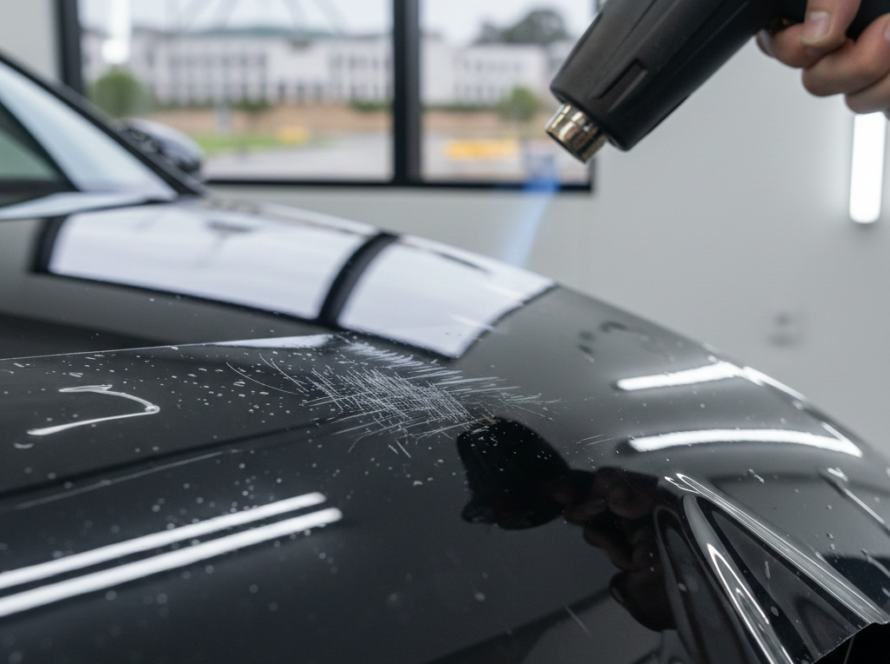
The good news is that protecting an EV uses the same proven tools as any other car — applied with extra care. The two pillars of EV paint protection are paint protection film (PPF) for physical defence and ceramic coating for chemical defence. PPF goes on the high-impact panels to stop stone chips, while a ceramic coating adds gloss, UV resistance, and a slick surface that makes washing gentler on soft paint.
For most electric cars, the ideal setup combines both. Our ceramic coating service guards against UV and contamination across every panel, while paint protection film shields the bonnet, bumper, and mirrors from impact. Applied early, this protects the factory paint before daily driving has a chance to mark it — and because a ceramic coating reduces fine scratches during washing, it keeps that delicate finish looking sharp for years.
4. The Safe-Wash Routine Every EV Owner Needs
Even the best EV paint protection needs the right wash routine, and this is where many owners go wrong. The single most important rule is to avoid automatic brush car washes entirely — a proper touchless wash or a careful hand wash is the only safe way to clean soft EV paint. Those spinning brushes are a leading cause of swirl marks on Teslas and other electric cars.
A safe routine is simple:
- Pre-rinse to lift grit before you touch the paint.
- Wash with a pH-neutral shampoo and a soft microfibre mitt.
- Rinse often and dry with a plush microfibre towel.
- Treat sensors, cameras, and the charging port gently with low pressure.
A touchless wash protects your coating and your paint at the same time, and washing in the cooler part of the day prevents water spots. Done consistently, a fortnightly touchless wash keeps your EV cleaner without grinding marks into the finish.
5. Protect Your EV From Day One in Canberra
The smartest EV owners protect their cars from day one, before the first chips and swirls ever appear. Booking protection soon after delivery is almost always cheaper and easier than correcting damage later, because once those marks are in the paint, fixing them means paint correction rather than simple prevention. Australia’s UV is among the harshest on Earth — you can check live levels for the capital on the ARPANSA UV index — and that sun is relentless on unprotected electric-car paint.
Whether you drive a Model 3, a BYD, or a Polestar, smart EV paint protection is the easiest way to keep your car looking showroom-fresh and holding its value. Protect the paint early, wash it the right way, and your electric car will reward you with years of effortless gloss — which is exactly what good EV paint protection is designed to deliver.
Frequently Asked Questions
1. Does my electric car really need paint protection? Yes. EV paint is typically thinner and softer than traditional car paint, so it chips, swirls, and fades more easily — especially under Canberra’s harsh UV. EV paint protection helps preserve that finish and the car’s resale value.
2. Should I get PPF or ceramic coating for my EV? Ideally both. Paint protection film stops stone chips on high-impact panels, while ceramic coating adds gloss and UV protection across the whole car. Many EV owners apply ceramic over PPF for complete coverage.
3. Why can’t I use an automatic car wash on my Tesla? The spinning brushes in automatic washes drag grit across soft paint and are a major cause of fine scratches. A touchless or gentle hand wash is far safer and protects any coating you have applied.
4. When should I protect a brand-new EV? As early as possible — ideally within the first few weeks. Protecting the paint before daily driving marks it is cheaper and easier than correcting scratches and chips later on.
5. Will paint protection help my EV’s resale value? Yes. Buyers pay more for clean, original paint, so a well-protected EV holds its value better. Book an inspection to plan the right EV paint protection for your car.